
About us
Amics de Foix
Since 1978, we have been studying, preserving and sharing the historical heritage of Torrelles de Foix. An archive for research, the memory of the village, and everyone who wants to get closer to it.
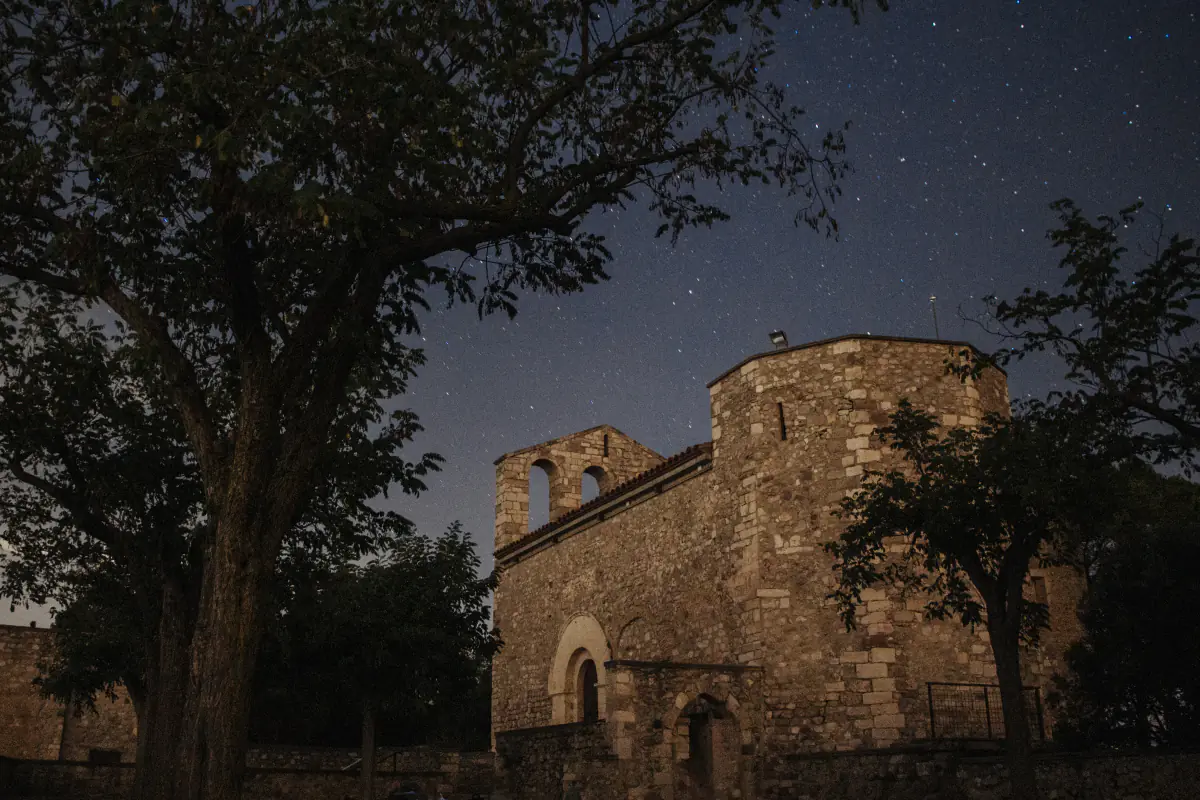
Amics de Foix was founded in 1978 to drive the recovery of the sanctuary of Santa Maria de Foix. The residents' initiative led to a restoration process that culminated in 1988, with the involvement of the Diputació de Barcelona.
Once the building was saved, the deeper work remained: gathering, organising and explaining what had been lost or was about to be lost. The war of 1936 had swept away the entire parish archive, and with it the altarpieces and the village records. What isn't on paper is often only in someone's memory.
What we do
- We collect and digitise documents, photographs and material from the municipal area.
- We maintain the record and memory of the municipality's heritage items.
- We handle enquiries from residents, students and researchers.
- We help anyone who wants to trace their ancestors in the village.
Your ancestors
To trace the genealogy of a family from Torrelles, the usual path doesn't exist: the municipality's parish registers, which held the baptisms, marriages and deaths, were burned in 1936.
What does remain are the census rolls. Page by page, they record who lived in each house in the municipal area, with names, surnames and often the nickname and trade. It's a slower path than the parish records, but it leads far: some village families, pulling on this thread, have traced ancestors who were already living in Torrelles in the 18th century.
And there's a source that goes back even further. From the cadastre that Felipe V imposed after the War of the Spanish Succession, a record survives at the Biblioteca de Catalunya, headed "Lugar de Torrellas de Foix", which lists what each resident paid, house by house. It has been digitised and is freely available, and there are more than a hundred entries for the village in the 18th century, house by house.
If you're looking for a surname, write to us and we'll check it. The more you tell us, the easier it is: surnames, approximate dates, a house nickname, the street or the farmhouse. You don't need to be from the village or a member of the association.
We don't share data from recent census rolls: they list living people, who have a right to their privacy. Family research works with the older pages.
The headquarters
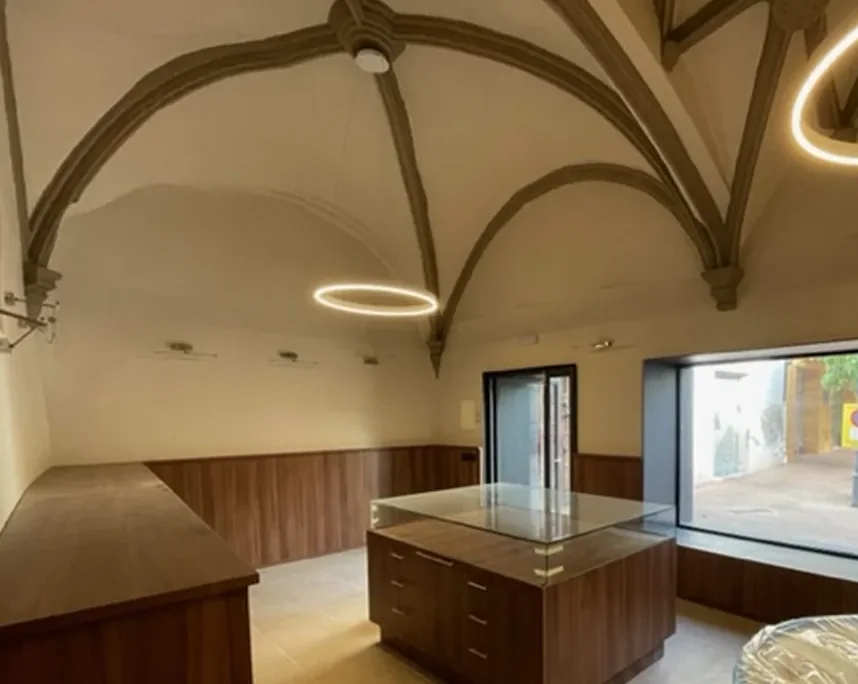
The association and the archive are housed in the Roser chapel, in the village centre. The restoration uncovered the Gothic ribbed vault, with its carved bosses, which had been hidden under later layers, and left the space ready to store records and to open it to anyone who wants to consult them.
Donations
The archive grows through what people bring to it. These are the registered entries.
-
The complete collection of El Xic Torrellenc
Donation from the Escofet familyEvery issue of the association's bulletin, from the very beginning to today. It's the collection being digitised at the Arxiu Municipal de Vilafranca del Penedès with the support of the Diputació de Barcelona, and the collection that will make it possible to browse it in full from here.
-
Illuminated parchment about the territory of Foix castle
Donation from Joan Ochoa MiróA framed sheet of parchment, with hand-painted illuminated letters and borders, an engraving of the church street and the Peguera coat of arms at the foot. The text summarises the succession of the lords of the territory: from Bernat Marcús, councillor to Ramon Berenguer IV, to the Cervelló family in 1288, to the Crown, to Bernat de Pinós, and finally to the Peguera family, who held it for almost three centuries until the lineage died out in 1881.
Still to be photographed and transcribed with the original in hand. The reading made from a photograph gives the castle "documented in 1607", which looks like a mistake for 1067, and says the estate went to «les salesianes». The oldest source, Josep Castellanos in 1893, says «Salesas», the Nuns of the Visitation, and the same encyclopaedia says «saleses» in one article and «salesianes» in another. Which convent received the estate we still don't know. The text also puts the Cervelló family in 1288 and the Peguera family "almost three centuries", but the documents already place them in 1262 and 1484. These are things to check.
-
Fragment of a Roman gravestone from the villa
Donation from Josep Escofet Carbó to the Vinseum, 1991Fragment of a marble gravestone, cut, roughed out and polished, 25.5 by 18.8 by 5.7 centimetres. Three lines of inscription in Roman square capitals survive: FESTVS, TVRPLLA and P·F. The piece was donated to the Vinseum in Vilafranca del Penedès, where it is kept: archaeology section, registration number 2849, entered on 25 May 1991.
The museum's label places the piece at the "La Berna" site, while the heritage record and the excavations refer to "la Verna". It isn't a mistake: it's the same site written two ways. "La Berna" is the form used in the official gazetteer, and "la Verna" the one used in the Heritage Map and the excavations.
Contact
To send us material, resolve a query, or correct information in this archive:
amicsdefoix@gmail.com
Torrelles de Foix, Alt Penedès